

How to Cook Beans
and other kitchen thoughts

Here is a delightful bowl of beans, gently warmed with peas, asparagus and alliums.
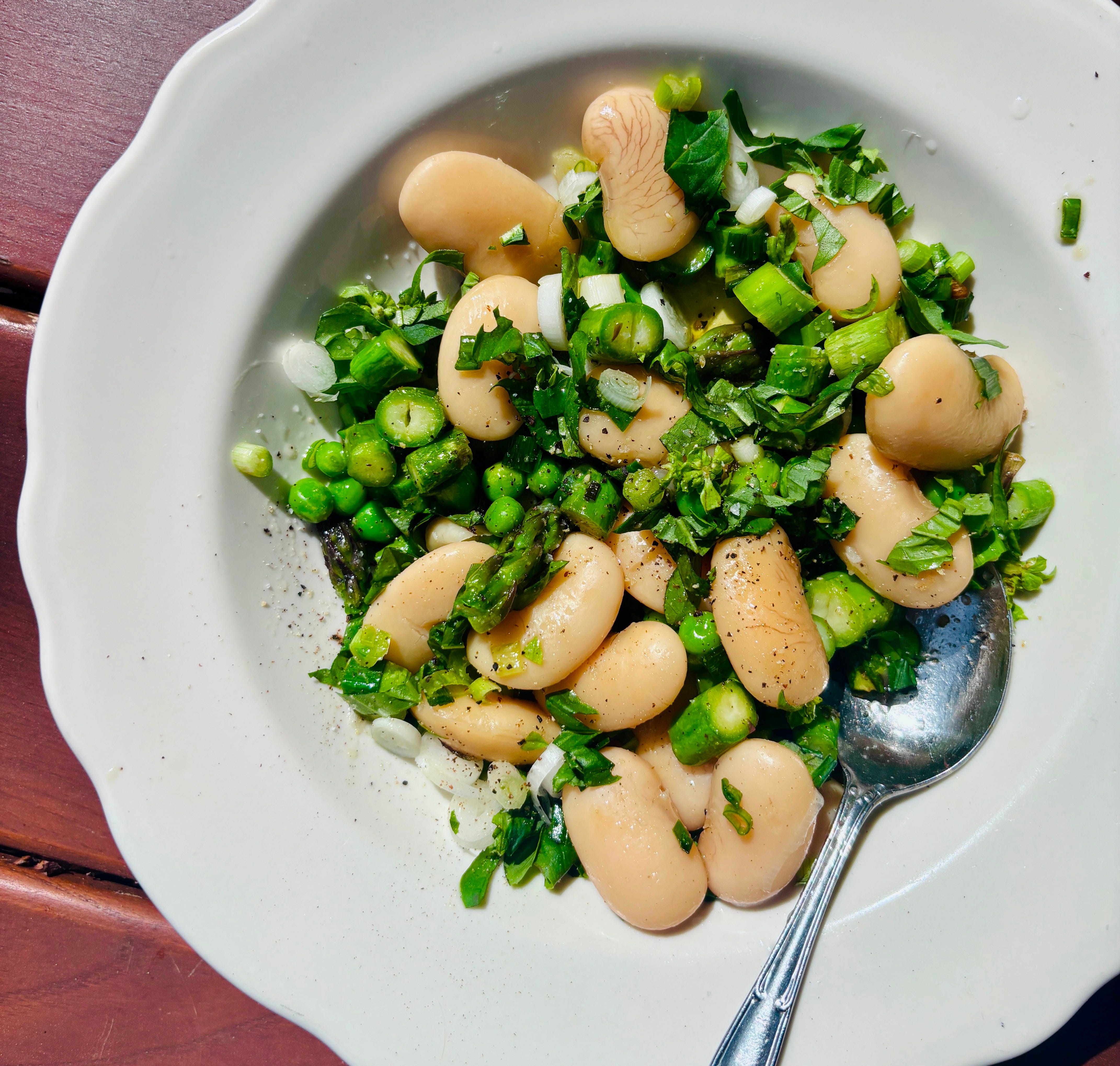
A pot of beans is something I make weekly. I love cooking my beans: creating a slow barely bubbling pot of plumping beans gently bobbing to the top and covered in a rich layer of olive oil and aromatics. Knowing I have them feels like security. It allows me to make nourishing meals at a whims notice. Beans in the morning with eggs and an herby salad, beans at lunch dressed in vinaigrette, spicy greens, a tin of fish and radishes, or beans at dinner with barely softened vegetables (like above). The variations are endless and having my weekly pot leaves me with a sense of comfort and ease. It is a weekly tradition in my home.
I have to be honest, I simply don’t agree with anyone that tells you not to soak your beans. We don’t know how long they have been stored and I generally find they never result in the same tenderness as a soaked bean. To further add to my cause, an un-soaked bean feels unpredictable in its cooking time…I never can seem to figure it out and it leads to me being careless (either by trying to hurry the process or overcooking because of neglect.) Beans will greatly appreciate the evening soak. I learned from Samin Nosrat to add baking soda and salt to the soaking water, both for digestibility and ease of cooking.
The next day, I drain the soaked beans and add them to a pot, covering them with fresh water about two inches above the bean line. Aromatics can vary, but on the most hurried days I add a few smashed garlic cloves, a bay leaf and a pinch of chili ( or a dried one from last summer.) With time permitting I add a cut onion, a halved carrot and depending on the bean a dash of crushed cumin or coriander seed or a hunk of parmesan rind. I add enough olive oil (very generous) to fully coat the top of the water, which I find essential as a way for the bobbing beans not to crack. The olive oil seems to somewhat absorb and result in a creamier bean. I turn on the pot and bring to a simmer, where I let it lazily bubble away. With certain beans, the larger varieties ( like a large bean Royal Corona) I place a lid on top so the tops of the beans so they don’t dry out ( and split.) The steam from the lid seems to helps prevent this. Half way though cooking, (yes it depends on the bean and yes I have to taste and get to know my beans), I season the bean water with salt to the desired amount I wish the beans to taste like by the end of cooking. To do this, I taste the water, after seasoning, gradually adding more until the liquid is the desired amount seasoned. I taste my beans every so often until they are tender, but not mushy. And I take them off the heat and let cool. They should be stored in their liquid and no bean should be exposed.
Once beans are cooked, I now can make lovely dishes like the one featured above. Thinly sliced spring onions are cooked in olive oil and salt. If beans are already cooled, then I add the beans and then I add coins of asparagus and a few handful of english peas. If beans were just finished I add them in with the peas. A dash of the pot liquor helps everything cook and get seasoned. I remove promptly and add finishing olive oil, a fresh squeeze of lemon juice and zest and any fresh tender herb I have around ( basil, dill, parsley, chives.) A simple meal awaits.
Other Notes from the Kitchen:
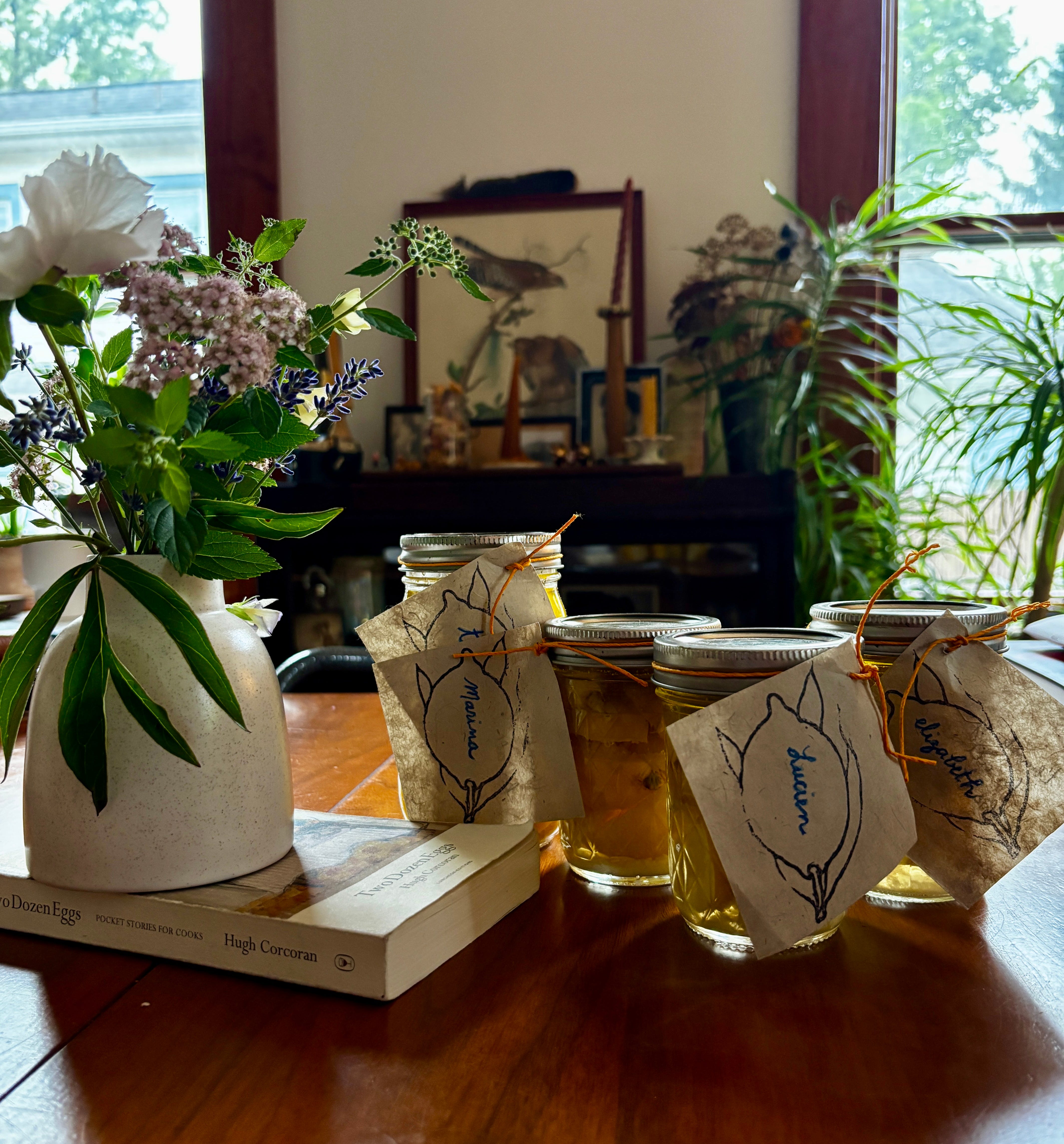
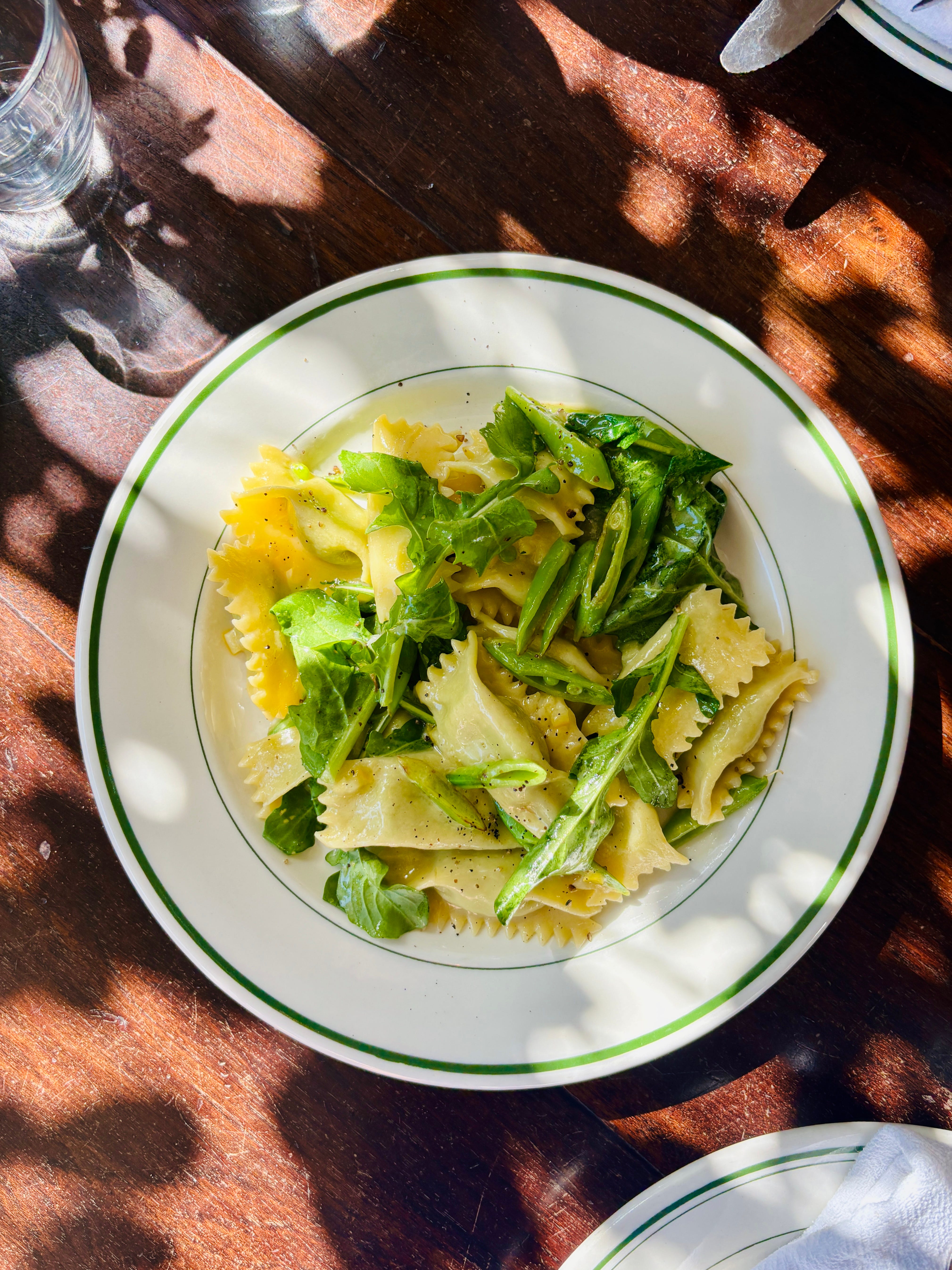
I have been making lots of preserved lemons from my moms Meyer lemon tree. I highly recommend making a batch for adding to summer produce. (They would be great finely chopped and added to any number of bean dishes.) I also love them with grilled summer squash, big piles of tomatoes, in cucumber salads and sprinkled on plates of melon. Really there are so many countless ways to use them, I could go on and on. I use the method and ratio from Nik Sharma (but I often remove the spices so they can be more versatile.) I use the oil in salad dressings, and the salty lemony brine is a great marinade for chicken or fish in lieu of salt. My favorite dish at Spencer right now for our June Menu is this beautiful asparagus filled pasta with snap peas and preserved lemon butter.
Another kitchen favorite is this Nicola Lamb shortcake recipe. I often struggle if I want my shortcake more biscuity or more scone like but this one seems to land perfectly in the middle. It is a great item to have in my freezer, for all the summer fruit. Shortcakes are not just meant for strawberries but they are also incredible with macerated berries, fresh cherries or peaches and always with a dollop of cream.
the beauty of those preserved lemons!